

Product Overview:
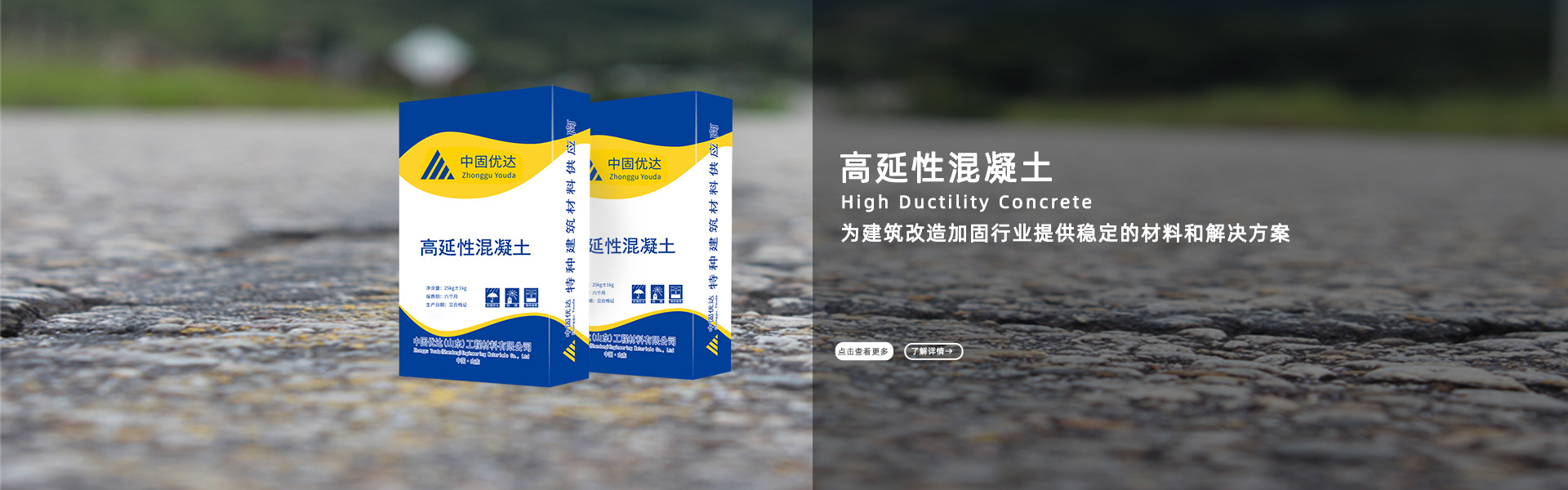
Engineered Cementitious Composite (ECC), also known as Strain-Hardening Cement-Based Composite (SHCC) or "bendable concrete," is an advanced fiber-reinforced material designed for exceptional durability, ductility, and crack control. Unlike conventional concrete or fiber-reinforced concrete (FRC), ECC exhibits unique strain-hardening behavior under tension, enabling it to withstand significant deformation while maintaining structural integrity and developing multiple fine microcracks (typically <100 µm width) instead of large, damaging fractures. This revolutionary behavior is achieved through meticulous micromechanical design principles and the use of specially selected microfibers, primarily Polyvinyl Alcohol (PVA) fibers.
Key Advantages & Characteristics:
High Ductility & Strain Capacity: Achieves tensile strain capacities typically ranging from 3% to 5%, orders of magnitude higher than normal concrete (0.01%) or standard FRC (0.1-0.3%). This imparts remarkable deformation ability without brittle failure.
Intrinsic Crack Control: Develops tight, self-controlled microcracks under load, significantly enhancing durability by limiting crack widths to below 100 microns, even at high strain levels. This minimizes water and aggressive agent ingress.
Enhanced Toughness & Energy Absorption: Exhibits excellent energy dissipation capabilities, making it ideal for seismic-resistant structures, impact protection, and blast mitigation.
Improved Durability: Tight crack width control drastically reduces permeability, leading to superior resistance against:
Chloride ion penetration & reinforcement corrosion
Freeze-thaw cycles
Chemical attack
Carbonation
Lightweight Potential: Can be designed with densities as low as ~1800 kg/m³ (vs. ~2400 kg/m³ for normal concrete) using lightweight aggregates, reducing dead load.
Compatibility: Bonds exceptionally well to existing concrete and steel reinforcement.
Sustainability Potential: Can incorporate industrial by-products (fly ash, slag) as supplementary cementitious materials (SCMs), reducing clinker factor and embodied carbon. Extended service life further enhances sustainability.
Typical Material Parameters:
Parameter | Typical Value Range | Notes |
Compressive Strength | 30 MPa - 90 MPa | Adjustable based on mix design |
Tensile Strength | 4 MPa - 8 MPa | After strain-hardening |
Tensile Strain Capacity | 3% - 8% | Signature property, far exceeds concrete/FRC |
First Crack Strength | 3 MPa - 5 MPa | |
Modulus of Elasticity | 18 GPa - 30 GPa | Generally lower than normal concrete |
Density | 1800 kg/m³ - 2200 kg/m³ | Can be optimized |
Average Crack Width | < 100 µm (0.1 mm) | Signature property, self-controlled |
Fiber Type | Primarily PVA | 1.5% - 2.5% by volume; 8-12mm length |
Flowability (Slump Flow) | 500 mm - 700 mm | Self-consolidating properties possible |
Chloride Permeability | Very Low | RCPT values significantly lower than concrete |
Freeze-Thaw Resistance | Excellent | ASTM C666 Procedure A durability factor >95% |
Primary Application Scenarios:
Seismic Resistance & Structural Safety:
Beam-Column joints in moment-resisting frames (enhancing ductility & energy dissipation).
Coupling beams in shear walls.
Plastic hinge zones in columns and bridge piers.
Structural retrofit/strengthening for seismic upgrade.
Durability-Critical Infrastructure:
Bridge deck link slabs (eliminating expansion joints & associated corrosion issues).
Water-retaining structures (dams, reservoirs, tanks, canals - minimizing leakage).
Marine structures (piers, seawalls - resisting chloride ingress & corrosion).
Pavement overlays (reducing reflective cracking, extending life).
Tunnel linings & sewer pipes (resisting chemical attack, reducing infiltration).
High-rise building facades & cladding panels (durability, crack control).
Repair & Rehabilitation:
Patch repairs for deteriorated concrete (superior bond, compatible deformation, durability).
Strengthening layers/overlays on bridges, parking structures, industrial floors.
Corrosion repair patches (providing long-term protection).
Emerging & Specialized Applications:
3D Concrete Printing: Exploits thixotropy and green strength for layer stability.
Blast & Impact Protection: Facades, security barriers, protective structures (high energy absorption).
Precast Elements: Facade panels, architectural elements requiring crack control and thin sections.
Sustainable Construction: Utilizing high volumes of fly ash/slag.
Conclusion:
Engineered Cementitious Composite (ECC) represents a paradigm shift in cement-based materials. Its unique combination of extreme ductility, intrinsic microcrack control, enhanced durability, and design versatility makes it an optimal solution for modern infrastructure challenges. ECC significantly improves the resilience, longevity, and safety of structures, particularly in seismic zones, harsh environments, and applications demanding superior crack control and durability. It enables innovative designs and offers long-term economic benefits through reduced maintenance and extended service life.
Sales hotline: +8616772555775 Mr. Huang
Technical Support: +8616730230785 Mr. ZhouEmail:[email protected]
Technical Support: +8616730230785 Mr. Zhou


 Online Service